Only just noticed this one, a review piece on the importance of understanding science scientifically, but science journalist, Phillip Ball.
At http://www.nature.com/news/the-mathematics-of-science-s-broken-reward-system-1.20987

Friday, 17 February 2017

Sunday, 29 January 2017
A special issue of Scientometrics on "Simulating the processes of science, technology, and innovation"
The special issue edited by Katy Börner, Bruce Edmonds, Staša Milojević & Andrea Scharnhorst of Scientometrics on "Simulating the processes of science, technology, and innovation" is now out.
It is in Volume 110, Issue 1, January 2017 at: http://link.springer.com/journal/11192/110/1?wt_mc= and includes:- An Editorial by Katy Börner, Bruce Edmonds, Staša Milojević & Andrea Scharnhorst
- "Agent-based simulation for science, technology, and innovation policy" by Petra Ahrweiler
- "Creating impact in the digital space: digital practice dependency in communities of digital scientific innovations" by Sabine Brunswicker, Sorin Adam Matei, Michael Zentner, Lynn Zentner & Gerhard Klimeck
- "Mapping technology space by normalizing patent networks" by Jeff Alstott, Giorgio Triulzi, Bowen Yan & Jianxi Luo
- "What’s wrong with Science?" by David Chavalarias
- "Towards the discovery of scientific revolutions in scientometric data" by Rogier De Langhe
- "An efficient system to fund science: from proposal review to peer-to-peer distributions" by Johan Bollen, David Crandall, Damion Junk, Ying Ding & Katy Börner
Monday, 5 December 2016
If you are near Chicago... A Science of Science meeting, today!
See http://www.science-of-science-chicago.org/
More evidence for the class divide in UK universities
...from an article in the Guardian.
See Guardian article at: https://www.theguardian.com/education/2016/dec/05/poorer-white-pupils-underperform-in-later-academic-choices-study
This is some more evidence that the role of the top universities is substantially about class and not just academic achievement. The top universities have simply not taken effective measures to address this lack of access.
Researchers found that as much as half of the gap in admissions to highly selective Russell Group universities between children on free school meals (FSM) and their better-off peers could be a result of factors beyond academic ability.From an analysis published by the Social Mobility Commission, headed by former Labour minister Alan Milburn.
See Guardian article at: https://www.theguardian.com/education/2016/dec/05/poorer-white-pupils-underperform-in-later-academic-choices-study
This is some more evidence that the role of the top universities is substantially about class and not just academic achievement. The top universities have simply not taken effective measures to address this lack of access.
Thursday, 1 December 2016
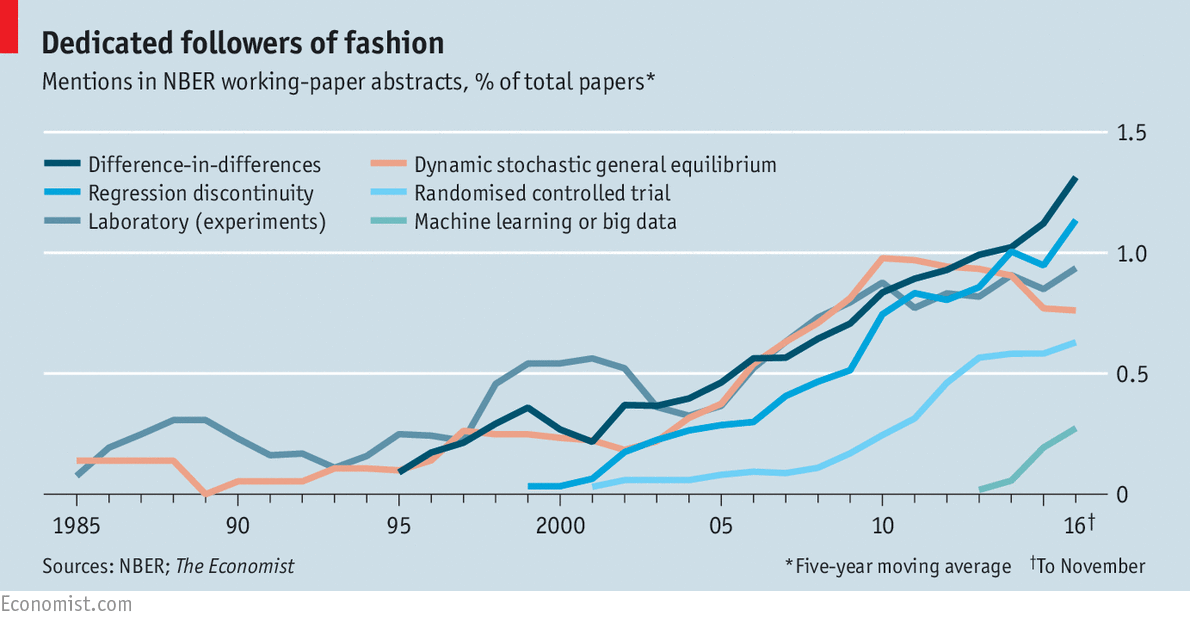
Friday, 11 November 2016
Understanding peer review and the social processes of science mentioned in EuroScience article
Self-organised scientific crowds to remedy research bureaucracy
by
Saturday, 24 September 2016
Papers on Peer Review and other aspects of Simulating Science @ Social Simulation 2016, Rome
Five papers on simulating Peer Review!
- Simulating Peer-review processes as social practices by Dignum Virginia, Dignum Frank
Indirect Reciprocity and the Miracle of Peer Review by Righi Simone, Takacs Karoly - Quality versus Sexiness: The rival qualities of papers in the competition for academics’ attention by Watts Christopher, Payette Nicolas
- The shadow of reciprocity on confidential vs. open peer review: An agent-based model by Bianchi Federico, Squazzoni Flaminio
- Peer review as a reputation system by Sabater-mir Jordi, Grimaldo Francisco, Paolucci Mario
- Complex systems approach to scientific publication and peer-review system: development of an agent-based model calibrated with empirical journal data by Kovanis Michail, Porcher Raphael, Ravaud Philippe, Trinquart Ludovic
- Simulating German Extra-University Research Institutes Using Ego Network Samples by Schilperoord Michel, Schrempf Benjamin, Dirlam Arno, Ahrweiler Petra
- Towards the Discovery of Scientific Revolutions in Scientometric Data by De Langhe Rogier
Subscribe to:
Posts (Atom)